
Combat sports place distinctive demands on clothing and training equipment. Athletes need apparel that accommodates controlled movement, intensive training sessions, and the specific requirements of their chosen discipline.
For boxing gyms, MMA clubs, martial arts academies, and private-label sports brands, working with a custom combat sports gear manufacturer provides an opportunity to develop products that reflect their identity while meeting their intended training requirements.
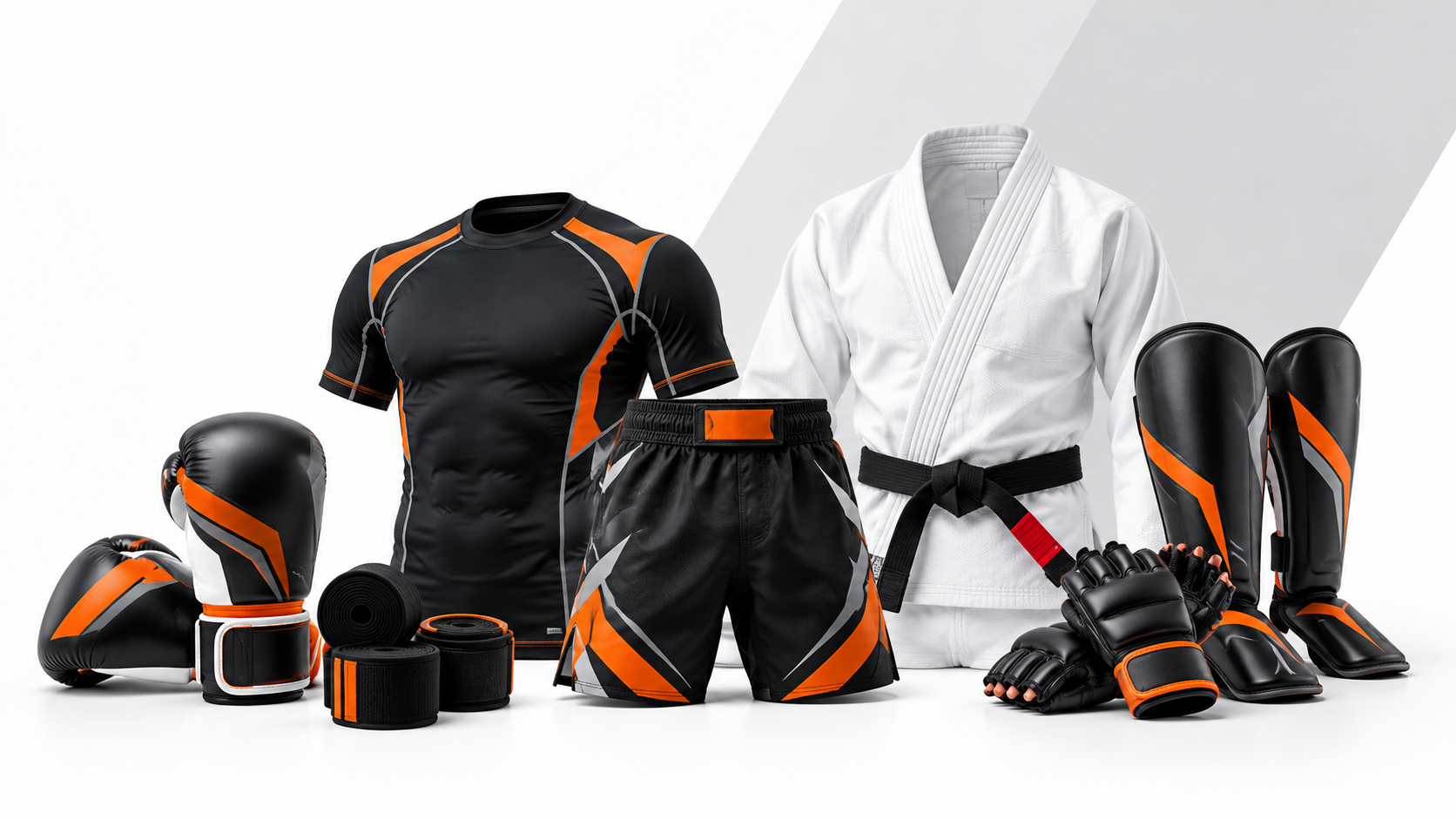
Combat sports manufacturing covers a diverse range of products, including boxing apparel, MMA shorts, rash guards, Brazilian Jiu-Jitsu uniforms, karate uniforms, judo suits, wrestling clothing, and other specialized garments.
At Catalyst Sports, we provide custom manufacturing solutions for combat sports apparel and related product categories, supporting sports organizations, wholesalers, retailers, and private-label brands worldwide.
Understanding Custom Combat Sports Gear
Custom combat sports manufacturing involves developing clothing and suitable sports products according to a buyer’s preferred design, measurements, fabric specifications, colors, branding, and intended use.
Unlike ordinary casual clothing, combat sports apparel often requires particular attention to seam construction, flexibility, garment fit, and durability.
A wrestling singlet, for example, has different construction requirements from a traditional karate uniform.
Similarly, MMA training shorts and Brazilian Jiu-Jitsu gis are developed for different movements and training environments.
Understanding these distinctions is important when planning a custom combat sports collection.
Popular Categories of Combat Sports Apparel
Boxing Apparel
Boxing is a physically demanding sport that involves regular movement, footwork, and upper-body activity.
Boxing apparel commonly includes training shorts, competition-style shorts, sleeveless tops, warm-up clothing, and gym uniforms.
For a boxing club, coordinated apparel creates a recognizable identity for athletes and coaching staff.
Custom boxing shorts can incorporate selected colors, waistband designs, logos, and decorative details.
Fabric and construction should be chosen according to whether the garment is intended for training, competition, or general athletic wear.
MMA Shorts and Training Clothing
Mixed martial arts combines different combat disciplines and requires clothing suited to a wide range of movements.
MMA shorts are commonly developed with flexible construction, suitable waistband arrangements, and materials selected for the intended training environment.
Design considerations may include:
- Flexible garment patterns
- Comfortable waistbands
- Durable seam construction
- Appropriate fabric weight
- Custom artwork and branding
- Suitable closures and finishing
Rash guards and compression-style training garments are also widely used in MMA training.
These products need careful attention to fit, fabric stretch, and stitching placement.
Brazilian Jiu-Jitsu Uniforms
Brazilian Jiu-Jitsu involves grappling techniques and frequent contact with the training uniform.
BJJ gis are therefore constructed differently from many other martial arts garments.
A typical gi consists of a jacket, trousers, and belt.
Manufacturers may use different fabric constructions and weights depending on the intended product specification.
Important development considerations include reinforced stitching, collar construction, sleeve length, trouser fit, and durability.
Competition uniforms may also need to meet the current requirements of the relevant governing organization.
For private-label BJJ brands, custom embroidery, woven labels, patches, and coordinated colors can help establish a distinctive appearance.
Karate Uniforms
Karate uniforms are generally designed to provide freedom of movement during training and technique practice.
A traditional karate gi normally includes a jacket, trousers, and belt.
Material weight, fit, and construction may vary according to training style, organization, and customer preferences.
Custom manufacturing allows academies to develop coordinated uniforms featuring approved logos, embroidery, and sizing specifications.
Judo Uniforms
Judo places significant physical demands on the uniform because of gripping and throwing techniques.
For this reason, judogi construction requires attention to appropriate fabric, seam reinforcement, fit, and garment structure.
A uniform intended for official competition should be checked against the applicable federation’s current rules and approval requirements.
For training apparel, manufacturers can work with clubs to develop products according to their preferred specifications.
Taekwondo Uniforms
Taekwondo uniforms are developed to accommodate kicking, stretching, and quick body movements.
The intended style and organization may influence uniform design, neck construction, color details, and sizing.
Custom uniforms give academies the opportunity to include their club identity while maintaining the appearance appropriate to their training discipline.
Wrestling Wear
Wrestling apparel commonly includes singlets, compression-style garments, training shirts, and warm-up clothing.
Stretch, fit, material recovery, and seam positioning are important aspects of product development.
Manufacturers should consider the intended use and any relevant competition requirements when developing custom wrestling apparel.
Why Material Selection Matters in Combat Sports
Material selection can influence comfort, garment durability, flexibility, and overall usability.
Different combat disciplines require different characteristics.
Cotton and cotton-based woven fabrics are commonly used in traditional martial arts uniforms.
Polyester fabrics can be suitable for selected training shirts, shorts, and athletic garments.
Polyester-spandex blends are frequently considered for rash guards, compression-style apparel, and flexible training clothing.
Reinforced woven constructions may be specified for garments exposed to repeated gripping or physical stress.
For suitable leather products and accessories, material selection should also consider flexibility, thickness, construction, and the intended application.
The fabric or material should be selected according to the product’s actual requirements rather than appearance alone.
Custom Branding for Combat Sports Clubs and Teams
Distinctive branding helps combat sports organizations create a consistent identity.
Athletes may train individually, but many represent a gym, academy, club, or competition team.
Coordinated clothing featuring the organization’s colors and logos contributes to a professional appearance.
Depending on the garment and material, custom branding options may include:
- Embroidered club logos
- Printed graphics
- Sublimated artwork
- Woven labels
- Custom patches
- Personalized athlete names
- Academy branding
- Private-label packaging
The placement and application method should be appropriate for the product.
For example, a large decorative patch might be suitable for one garment but uncomfortable or noncompliant with competition rules on another.
Thoughtful branding should complement garment function.
Manufacturing Considerations for Boxing and MMA Gear
Combat sports equipment should be evaluated differently from ordinary clothing.
Where a project includes padded, protective, or impact-related equipment, important design considerations may include material suitability, construction consistency, fastening systems, and applicable safety requirements.
Visual appearance alone cannot establish the protective performance of a product.
Brands sourcing equipment for training or competition should confirm relevant technical specifications and any required testing or certification with their manufacturing partner.
This is particularly important when making safety or protective-performance claims.
How to Develop a Private Label Combat Sports Collection
Private-label combat sports manufacturing provides an opportunity for brands to introduce products under their own identity.
A structured development process can help buyers make informed decisions.
Step 1: Identify Your Target Customers
Consider whether the collection is intended for boxing gyms, MMA athletes, martial arts academies, recreational trainees, or wholesale retailers.
Different customers have different requirements.
A BJJ-focused brand may prioritize gis and rash guards, while an MMA apparel company may begin with shorts and training shirts.
Step 2: Choose Your Initial Products
Developing a focused collection can simplify product planning.
For example, an MMA clothing brand might introduce three core products:
- Custom MMA shorts
- Training rash guards
- Team training T-shirts
This approach allows the company to develop a coordinated product identity.
Step 3: Prepare Technical Requirements
Communicate the intended design through clear product specifications.
These may include measurements, colors, preferred fabrics, artwork, logos, stitching requirements, and labeling instructions.
Technical drawings and reference samples can help explain particular garment details.
Step 4: Evaluate Samples
Sample evaluation is a valuable stage of apparel development.
Buyers should examine fit, movement, fabric, stitching, branding, and overall appearance.
For products used in intensive physical activity, practical wear evaluation can identify potential issues that may not be apparent during a visual inspection.
Step 5: Confirm Bulk Production Details
Before confirming an order, discuss quantities, pricing, approved designs, materials, production timelines, and packaging.
Clearly documented expectations support better coordination throughout the manufacturing process.
Step 6: Plan International Delivery
International buyers should clarify shipment arrangements and destination requirements.
Depending on the products and importing country, relevant labeling, customs, and product compliance obligations may also need attention.
What Makes a Reliable Combat Sports Manufacturer?
Choosing a manufacturing partner requires evaluating more than the supplier’s product photographs.
A good starting point is to confirm experience with the specific garment category you want to develop.
A manufacturer familiar with casual T-shirts may not necessarily understand the construction requirements of a grappling uniform.
Buyers should also evaluate communication, willingness to discuss technical specifications, sample quality, consistency, and production arrangements.
Clear communication can be particularly important for custom products where design details must be interpreted accurately.
Why Combat Sports Brands Work with Manufacturers in Sialkot
Sialkot, Pakistan, is known internationally for its sports goods manufacturing industry.
The city supports a broad network of businesses involved in sports-related production and export activities.
For combat sports companies sourcing internationally, this manufacturing environment can offer opportunities to discuss customized garments and related products.
Nevertheless, the appropriate manufacturing partner should always be selected according to the actual product requirements, demonstrated capabilities, and agreed quality expectations.
Custom Combat Sports Manufacturing at Catalyst Sports
Catalyst Sports is based in Sialkot, Pakistan, and works with international customers seeking custom sportswear, combat sports apparel, fitness wear, and private-label clothing.
Our combat sports product range includes clothing categories associated with boxing, MMA, karate, judo, Brazilian Jiu-Jitsu, wrestling, taekwondo, and other martial arts disciplines.
We focus on developing products according to customer-provided specifications, including selected materials, colors, sizing, branding, and garment construction.
Our goal is to help businesses coordinate suitable manufacturing solutions for their own brands, clubs, academies, and wholesale markets.
Whether your business requires coordinated training apparel or a new martial arts clothing collection, we can discuss the requirements of your project.
Frequently Asked Questions
Can martial arts academies order customized uniforms?
Yes. Academies can discuss custom uniforms featuring their preferred colors, sizing, logos, and branding, subject to product and production requirements.
Can I develop combat sports apparel under my own brand?
Private-label manufacturing allows businesses to create apparel using their own brand identity and approved product specifications.
What information is needed for a custom combat sports order?
Useful information includes product type, design references, sizes, fabric preferences, branding details, quantities, and intended use.
Are competition uniforms different from training uniforms?
They can be. Competition apparel may need to comply with specific governing-body rules concerning fabric, dimensions, branding, or other construction details.
Can international buyers source combat sports apparel from Pakistan?
Yes. International buyers can coordinate custom manufacturing and export arrangements with suitable Pakistani suppliers, subject to agreed specifications and applicable shipping requirements.
Final Thoughts
Combat sports apparel must be developed with an understanding of its intended activity.
Fit, fabric, flexibility, stitching, garment construction, and appropriate branding all influence the final product.
For clubs and private-label businesses, custom manufacturing offers the flexibility to develop distinctive collections while maintaining control over design specifications.
Working with a manufacturer that understands product development and communicates clearly can make the sourcing process more organized and predictable.
Looking for a custom combat sports gear manufacturer?
Visit www.catalystsportsintl.com to contact Catalyst Sports about custom boxing apparel, MMA training wear, martial arts uniforms, wholesale combat clothing, and private-label manufacturing requirements.